#241: The War Against Israel

The post defends Israel’s right to exist and respond to aggression, while acknowledging the suffering of Palestinians. It critiques anti-Israel rhetoric that veers into antisemitism and calls for a nuanced understanding of the conflict rooted in history, justice, and the protection of democratic values.


µ#11: Symphony 5, Movement I

I've finally finished the first movement of Symphony 5: The Defiant. Demo music is available on Soundcloud. Movements 2-5 will follow throughout 2024-26, hopefully.

#240: Hope, Duty & the Future

Hope can be a double-edged sword—essential yet often leading to disappointment. Instead of clinging to fragile dreams, we should embrace our responsibility to others and the world. Consciously shaping the present empowers us to create a brighter future. The true essence of hope lies not in waiting but in action.

#239: Is History Helpful for Solving Conflicts?

History helps explain how conflicts arise, but relying on it to prescribe solutions can be limiting. The post argues that ideological uses of history often perpetuate division and suffering. True progress may require letting go of historical grievances to build inclusive futures, as exemplified by the European Union’s transcendence of past territorial disputes.

#238: Kristallnacht, 85 Years Later

Eighty-five years after Kristallnacht, the post reflects on the enduring lessons of that night of terror. It emphasizes the importance of historical memory in resisting antisemitism and authoritarianism today. The analysis warns against moral relativism and the normalization of hate, arguing that silence and indifference remain complicit. Remembering Kristallnacht is framed as a moral obligation to defend human dignity and democratic values in the face of rising extremism.

#237: No, Israel is Not Committing Genocide in Gaza

Accusations that Israel is committing genocide in Gaza are firmly rejected. The post argues that while civilian suffering is real and tragic, the term “genocide” misrepresents both intent and context. It distinguishes between military action and systematic extermination, warning that misuse of such terms undermines genuine human rights advocacy. The analysis calls for moral precision, historical awareness, and a commitment to truth in evaluating the conflict

#236: Things are Not OK. We Should Be Able to Admit It

The post acknowledges widespread global suffering—from war and economic instability to climate change and media overload—and validates the emotional toll it takes. It encourages self-care, critical engagement, and realistic hope. Rather than denying pain, it calls for honest reflection and small, meaningful actions to improve the world and restore faith in humanity.

#235: Rumors of Putin’s Death

The Kremlin’s denial of rumors about Putin’s death is interpreted as a sign of weakened control over public perception. Drawing on fictional examples, the post argues that power erodes when leaders must respond to unverified claims. It links this moment to broader instability in Russia, suggesting cracks in the regime’s narrative and authority.

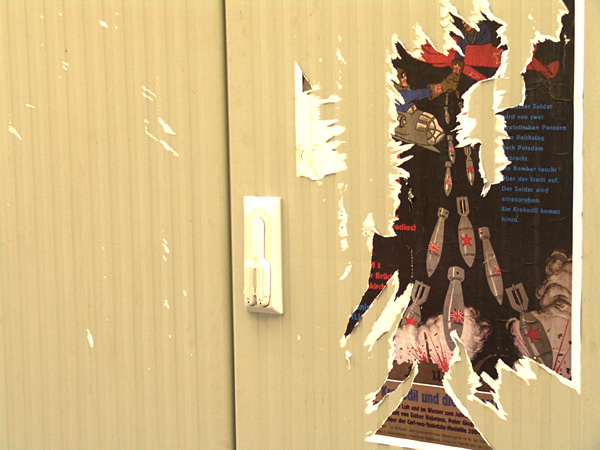
Photos: Berlin, 2001

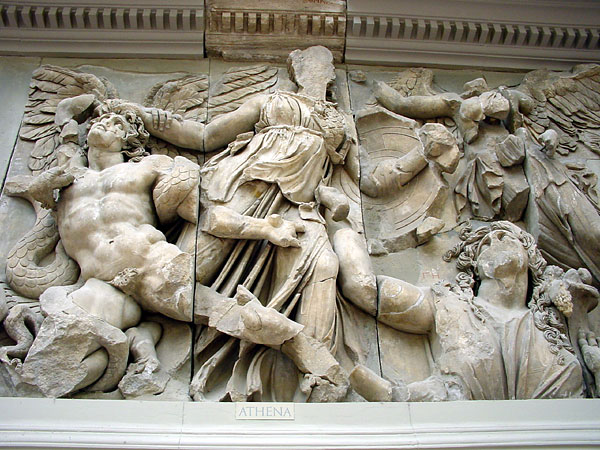
Photos: Pergamon Museum, 2003/05

#234: Israel is Neither Colonizer Nor Apartheid State

The post refutes claims that Israel is a colonial or apartheid state, arguing that such labels distort history and ignore the region’s complex realities. It emphasizes Israel’s democratic structure, diverse population, and existential vulnerability. The analysis warns that misusing these terms undermines legitimate critique and fuels antisemitic narratives.

#233: On Equity and Equality of Opportunity

Equity is clarified as the effort to ensure genuine equality of opportunity, not guaranteed outcomes. The post critiques public confusion—exemplified by a televised exchange between Bernie Sanders and Bill Maher—and argues that equity supports fairness and democracy by removing systemic barriers to inclusion. It defends D.E.I.B. as a vital civic commitment.

#232: The Downside of the Emotional Appeal

Emotional appeals in political discourse are critiqued as potentially manipulative and ineffective. The post argues that while emotion can initiate engagement, it must be followed by logic and evidence to create lasting change. Overreliance on personal stories risks solipsism, miscommunication, and alienation, especially in polarized environments.

#231: Centrism Is a Methodology, Not Primarily an Ideology

Centrism is defended as a pragmatic approach to governance rooted in compromise, dialogue, and democratic values. The post argues that ideological purity undermines progress, while centrism enables sustainable change by engaging diverse perspectives. It presents centrism as a method for navigating complexity, not a weak or indecisive stance.

#230: Against Hamas, Against Antisemitism, Against Antizionism

The post condemns Hamas’s violence, rising antisemitism, and ideological antizionism. It argues that criticism of Israeli policy must not devolve into denial of Israel’s right to exist. The analysis calls for moral clarity in distinguishing between legitimate protest and hate, defending both Jewish identity and Palestinian dignity.

#229: Fighting for Love in Times of War

Amid war and hatred, the post calls for a radical commitment to love, empathy, and human dignity. It argues that emotional resilience and moral courage are essential to resisting dehumanization. Love is framed not as naïve sentiment, but as a political and ethical stance against violence and despair.

#228: Hamas Attacked Israel

The post documents and condemns Hamas’s attack on Israel, emphasizing the brutality and ideological extremism behind it. It argues that the assault was not a spontaneous uprising but a calculated act of terror. The analysis calls for solidarity with victims and a rejection of narratives that justify or minimize such violence.

#227: Whatever Your Politics, There is No Reason to Support Putin

Support for Putin is rejected across the political spectrum. The post argues that his regime embodies authoritarianism, corruption, and aggression, posing a threat to global democracy. It critiques Western figures who excuse or admire Putin, warning that such positions betray democratic principles and moral integrity.

#226: We Must Not Give Up on Global Democracy

The post defends global democracy against rising authoritarianism and cynicism. It argues that democratic values—freedom, accountability, human rights—must be actively protected and promoted. Despite setbacks, the analysis urges continued engagement, solidarity, and hope, framing democracy as a fragile but vital global project.

#225: Religion, Transcendence & Nature

The post explores the intersection of religion, transcendence, and nature, arguing that spiritual experience is deeply rooted in the natural world. It critiques dogmatic theology and calls for a more open, experiential understanding of the divine. Nature is presented as a source of awe, ethical reflection, and existential insight.

#224: The Individual and Society

The relationship between individual autonomy and social responsibility is examined. The post argues that true freedom requires community, empathy, and shared values. It critiques hyper-individualism and calls for a renewed commitment to civic engagement, democratic dialogue, and the ethical bonds that sustain society.

µ#10: More Content on Erratic Attempts YouTube Channel

An update highlighting new videos on the Erratic Attempts YouTube channel, including reflections on politics, culture, and philosophy. The post encourages viewers to engage with multimedia content that complements the blog’s written work.

Φ: Poem: Life Is A Wake

A poetic meditation on mortality, memory, and the rituals of grief. The poem evokes the image of life as a wake—an ongoing process of remembrance and reckoning with loss, framed by philosophical and emotional depth.

Φ: Poem: Qaddish, Part 2.4

A lyrical continuation of the Qaddish series, blending spiritual reflection with historical trauma. The poem invokes themes of mourning, resistance, and transcendence, drawing on Jewish tradition and personal memory to confront violence and affirm dignity.

#223: Should Ukraine Be More Thankful and Less Demanding?

Criticism of Ukraine’s assertiveness is challenged by framing its demands as morally justified. The post argues that Ukraine’s fight for survival benefits global democracy and that gratitude should flow both ways. Calls for humility are acknowledged but contextualized within the urgency of war.

#222: Science Fiction and Comics Have Always Been Woke, or: Of Course Women and Minorities Can Be Heroes!

The post defends diversity in science fiction and superhero media, arguing that these genres have always engaged with social justice. It critiques backlash against female and minority protagonists and celebrates the genre’s progressive legacy as a space for ethical and philosophical exploration.

#221: Does Putin Want to Negotiate?

Putin’s calls for negotiation are dismissed as strategic deception. The post argues that Russia’s actions reveal imperial intent, not genuine diplomacy. It warns against naïve engagement and emphasizes the need for clarity and resolve in confronting authoritarian aggression.

#220: Russia’s Only Interests Are Terror and Destruction. It Must Be Defeated

Russia’s war in Ukraine is framed as a campaign of terror with no legitimate strategic aims. The post argues that defeat is necessary to halt its imperial ambitions and restore global stability. It calls for sustained support and moral clarity in resisting authoritarian violence.

#219: Some Reflections on Fukuyama and the End of History

Fukuyama’s thesis is revisited in light of contemporary authoritarian resurgence. The post critiques premature triumphalism and argues that democracy remains fragile and contested. It calls for renewed philosophical engagement with history, ideology, and the conditions of freedom.

#218: The West Is Not in Decline

Contrary to popular narratives, the post argues that the West retains moral and institutional strength. It critiques fatalism and urges confidence in democratic resilience, innovation, and pluralism. The analysis defends liberal values against both internal cynicism and external threats.

#217: Thoughts on June 17: The GDR Was an Inhumane Dictatorship

Commemorating the 1953 East German uprising, the post condemns the GDR as a repressive regime. It honors the courage of protestors and warns against nostalgia for authoritarian systems. The reflection affirms the importance of historical truth and democratic memory.

#216: What to Make of Recent UFO Revelations by David Grusch

The post examines claims by David Grusch about recovered alien spacecraft and bodies, emphasizing the lack of direct evidence. It argues that while extraterrestrial life is likely, large-scale conspiracies are implausible. The analysis explores cultural fascination with UFOs and concludes that skepticism remains the most reasonable stance until verifiable proof emerges.

#215: Commonsense Diversity

Diversity work must prioritize real-world impact over rhetorical purity. The post argues that change requires dialogue, empathy, and respect—not censorship or coercion. It critiques cancel culture and tone policing, advocating for inclusive engagement that persuades rather than alienates. Diversity, equity, inclusion, and belonging are framed as common-sense goals rooted in shared human dignity.

#214: “Race” as the Experience of Dehumanization

Race is exposed as a political construct born of colonialism and sustained by economic exploitation. The post traces its origins to slavery and eugenics, arguing that racism persists through institutional and cultural dehumanization. It calls for a shift from guilt to responsibility, urging collective action to dismantle systemic inequality and affirm universal humanity.

#212: We Need to Build the Future Now: Spaceflight is not Optional

Space exploration is framed as a moral and strategic necessity. The post critiques short-term thinking and urges global cooperation to expand humanity’s reach beyond Earth. It highlights the benefits of spaceflight—from technological innovation to climate monitoring—and calls for political frameworks to guide future colonization, resource use, and interplanetary ethics.

#211: Is the Pandemic Over?

Despite public fatigue, the post argues that COVID-19 remains a global threat. It critiques premature declarations of normalcy and emphasizes the ongoing risks of long COVID, waning immunity, and inadequate data. The analysis calls for continued caution, mask-wearing, and respect for scientific expertise, framing pandemic response as a moral duty to protect others.

#210: Why (Some Degree of) Identity Politics is Necessary

The post defends identity politics as a necessary response to systemic exclusion. It argues that while individuality should be the goal, social structures often deny recognition to marginalized groups. Identity is framed as socially constructed and politically enforced, making advocacy essential to expanding the boundaries of normality and achieving genuine equality.

#209: We Need to Control Artificial Intelligence

AI’s rapid development is critiqued as ethically and epistemologically dangerous. The post warns that unchecked systems can distort truth, amplify misinformation, and undermine democratic discourse. Drawing on media theory and philosophical traditions, it calls for regulation, transparency, and a pause in deployment to ensure responsible integration into society.

#208: The Perversion of Everything Russian: From Leningrad to Mariupol

The post traces how Russian identity has been distorted by authoritarianism, from the heroic legacy of Leningrad to the devastation of Mariupol. It argues that Putin’s regime has perverted cultural memory, weaponized history, and turned national pride into imperial aggression. The analysis condemns the use of propaganda to justify war crimes and calls for reclaiming Russian culture from the grip of violence and lies.

#207: Democracy Only Works with a Strong Separation of Powers

The post argues that liberal democracy depends on institutional checks and balances. Drawing on historical examples from Athens, Rome, and Weimar Germany, it warns against populist erosion of judicial and legislative independence. Democracy is framed not as majority rule, but as a system that protects individual rights through structural safeguards.

#206: The Importance of Being Political

Political engagement is presented as a moral and civic duty. The post critiques apathy and argues that being “unpolitical” enables authoritarianism. Drawing on Pericles, Kant, and liberation theology, it calls for critical thinking, public discourse, and active participation in shaping society. Citizenship is framed as both a right and a responsibility.

#205: If You Want Peace: Why We Must Help Ukraine

Peace is defended as inseparable from justice and resistance to aggression. The post argues that helping Ukraine is not warmongering but a moral imperative to defend sovereignty and human rights. It critiques false neutrality and calls for solidarity with democratic nations under threat.