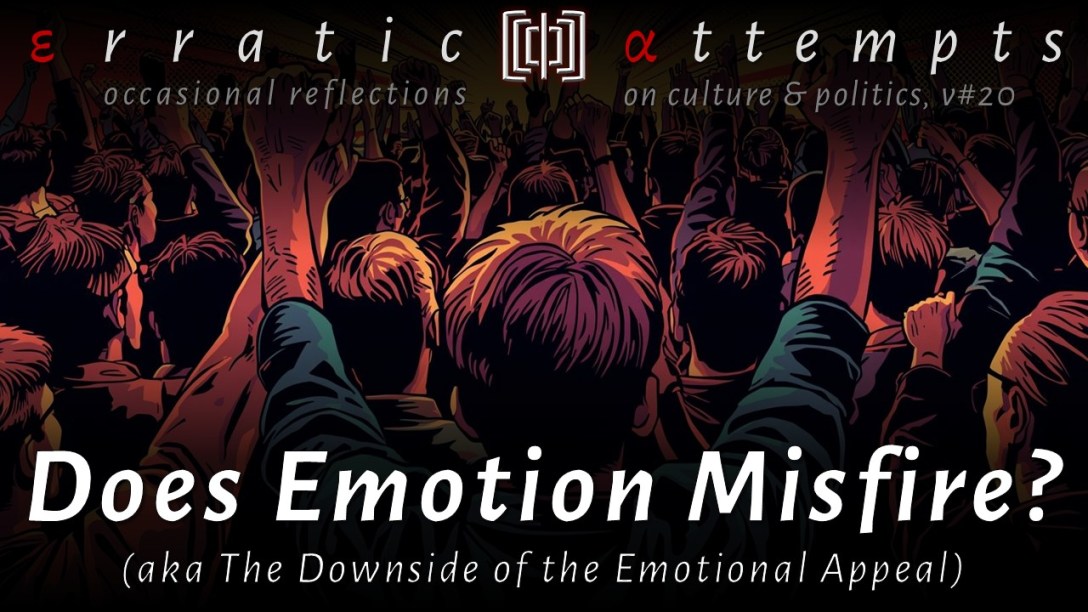
#232: The Downside of the Emotional Appeal

Emotional appeals in political discourse are critiqued as potentially manipulative and ineffective. The post argues that while emotion can initiate engagement, it must be followed by logic and evidence to create lasting change. Overreliance on personal stories risks solipsism, miscommunication, and alienation, especially in polarized environments.

#209: We Need to Control Artificial Intelligence

AI’s rapid development is critiqued as ethically and epistemologically dangerous. The post warns that unchecked systems can distort truth, amplify misinformation, and undermine democratic discourse. Drawing on media theory and philosophical traditions, it calls for regulation, transparency, and a pause in deployment to ensure responsible integration into society.

#183: What Are Russians Thinking?

Russian public opinion is shaped by propaganda, fear, and historical trauma. The post explores how narratives of victimhood and imperial pride obscure moral responsibility. Understanding this mindset is key to countering authoritarianism and supporting democratic reform.

#181: Are We too Stupid for the Internet?

Digital culture rewards outrage, misinformation, and shallow engagement. The post critiques algorithmic manipulation and the erosion of attention spans, warning that democracy and reason are at risk. Reclaiming the internet requires deliberate effort to foster depth, nuance, and truth.

#151: Putin Is a Fascist per Definition

Putin’s regime meets the criteria of fascism: ultranationalism, suppression of dissent, glorification of violence, and cult of personality. Denial of this reality enables complicity. The label is not rhetorical—it’s descriptive.

#96: We Need Neutral News Media

Media polarization erodes public trust and democratic discourse. The post calls for journalism grounded in facts, fairness, and accountability—not tribalism or clickbait. Neutral reporting is essential to informed citizenship and resisting ideological manipulation.

#93: Don’t Picture This: The Trouble With Selfies

Selfies are critiqued as symbols of narcissism and digital detachment. The post explores how constant self-documentation distorts identity, undermines authenticity, and replaces experience with performance. Real presence demands stepping outside the frame.

#73: The Destruction of Creativity through “Social” Media

Social media incentivizes conformity, performance, and instant gratification. The post warns that algorithmic culture erodes depth, originality, and risk-taking. Creativity requires solitude, slowness, and imperfection—qualities at odds with digital metrics.

#72: Can We Trust The Media?

Media trust depends on transparency, accountability, and editorial integrity. The post critiques bias, sensationalism, and corporate influence, while defending the necessity of journalism. Trust must be earned—not assumed or rejected wholesale.

#39: Free Speech is Absolute

Free speech must be protected without exception—even offensive speech. The post argues that truth emerges through peaceful, respectful, and equal exchange, not censorship. Suppressing speech leads to authoritarianism. Democracy depends on allowing disagreement, not silencing it.

#22: There Are No “Alternative” News Sources

Truth is not plural. The post critiques the idea of “alternative facts” and defends journalism as a public good. While bias exists, the solution is media literacy—not retreat into echo chambers. Reality must be shared to sustain democracy.

#21: Media: Don’t Tell People What To Think

Media shape how we think, not what we think. The post explores framing, agenda-setting, and narrative influence, arguing that awareness—not rejection—is the key to navigating information. Blaming media oversimplifies complex dynamics.