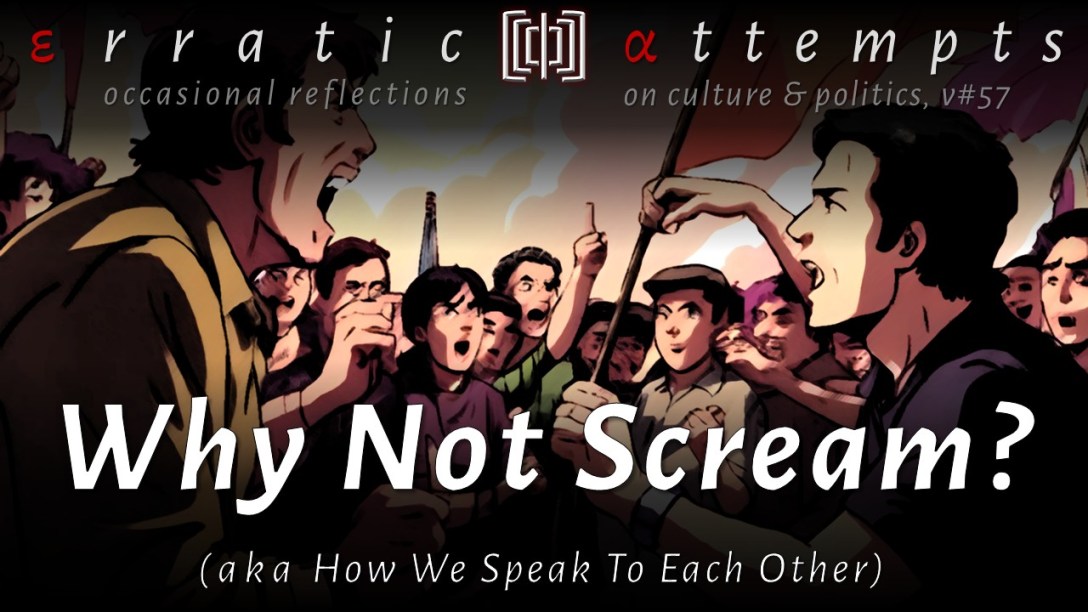
#289: How We Speak to Each Other Matters

In a world filled with shouting and outrage, true dialogue is drowned out. This provocative chaos achieves nothing meaningful; it only fosters resentment and misunderstanding. To effect real change, we must abandon the theatrics of screaming and embrace active communication, treating others with respect and understanding. Are you ready to listen?
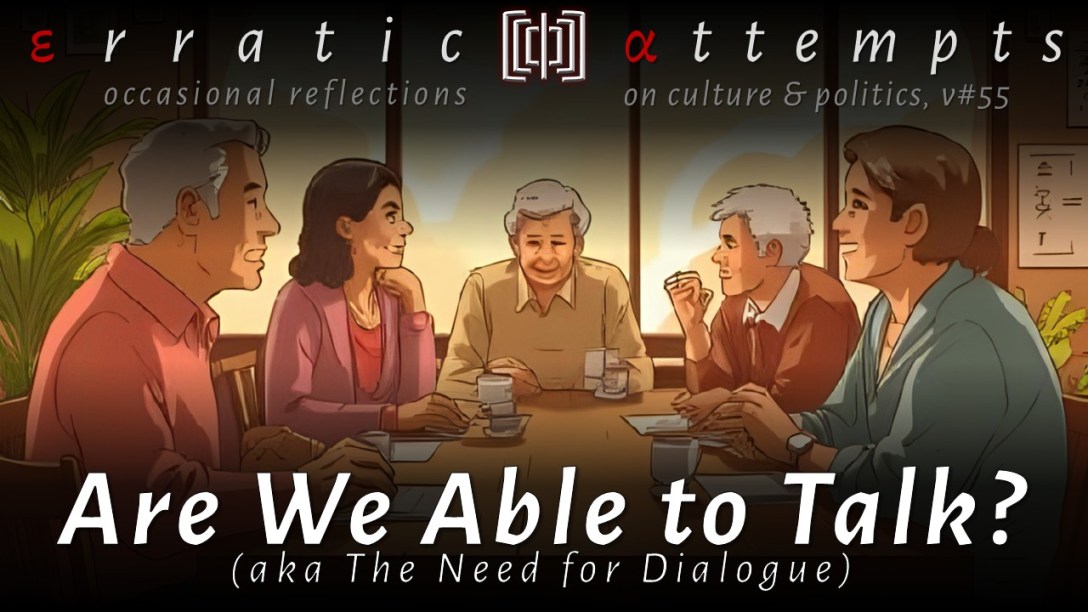
#287: The Need For Dialog

In a world suffocated by essentialism and tribalism, real dialogue amid disagreement seems a distant dream. The pandemic accelerated society’s drift into superficial identity politics, suffocating nuanced discourse. As humans, we must reject simplistic labels and embrace complexity, seeking understanding over division. Only then can democracy truly thrive in diversity.

#286: Democracy Needs Humility

In a world tainted by partisan divide, the essence of democracy hinges on humility and listening to all voices. Politicians must ditch blind loyalty, embrace complexity, and recognize that people's values matter more than rigid ideologies. Only then can true democracy flourish, transcending the toxic tribalism gripping political discourse today.

#254: What If I’m Wrong?

The possibility of being wrong about the war in Ukraine is considered not as a sign of weakness, but as a moral and intellectual responsibility. The post explores the dangers of false equivalence and the temptation to retreat into neutrality. It argues that acknowledging uncertainty must not lead to passivity or moral relativism. Instead, it calls for clarity in confronting aggression, recognizing the stakes of the conflict, and maintaining a principled stance even amid complexity and doubt.

#250: Take a Moment to Build Your Soul

Drawing on Viktor Frankl, Jodorowsky, and Zen philosophy, the post reflects on meaning-making amid crisis. It urges readers to embrace suffering as transformative, reject commodified mindfulness, and cultivate inner resilience. In a world marked by dread and uncertainty, building one’s soul becomes a moral imperative—choosing life, love, and dignity over despair.

#231: Centrism Is a Methodology, Not Primarily an Ideology

Centrism is defended as a pragmatic approach to governance rooted in compromise, dialogue, and democratic values. The post argues that ideological purity undermines progress, while centrism enables sustainable change by engaging diverse perspectives. It presents centrism as a method for navigating complexity, not a weak or indecisive stance.

#199: Why Positionality Matters

The post argues that recognizing one’s positionality—social, cultural, and historical context—is essential for honest dialogue and intellectual humility. While arguments should stand on their own, identity shapes perception and bias. Acknowledging this fosters mutual respect, deeper understanding, and more constructive critique.

#180: Let Biden Be Biden

Biden’s political style—empathetic, pragmatic, and institutionally grounded—is defended against calls for radical transformation. The post argues that incrementalism and coalition-building are strengths, not weaknesses, in a polarized democracy. Leadership must reflect both conviction and restraint.

#164: The Answer to Death is Life

Death is confronted not with despair but with affirmation. Life must be lived fully, ethically, and creatively in the face of mortality. Meaning arises from action, love, and the refusal to surrender to nihilism.

µ#8: Will Smith Apologized; Let It Go

The slap at the Oscars was wrong, but Smith apologized. Continuing to vilify him reflects a punitive culture obsessed with moral purity. Forgiveness and proportionality are essential to public discourse. Let the apology stand.

#139: Nature Demands Humility: Lessons from Jurassic Park World

Jurassic Park is more than entertainment—it’s a cautionary tale about hubris. Human attempts to control nature inevitably backfire. The films illustrate how technological arrogance and corporate greed ignore ecological complexity. Real-world parallels abound, from climate change to pandemics. Nature isn’t ours to dominate; it demands respect.

#135: Conspiracy Belief, Science, Ego and Humility

Rejecting expertise in favor of personal intuition reflects ego, not insight. Scientific consensus exists for a reason: complexity demands specialization. The Dunning-Kruger effect explains why the least informed often feel most confident. True wisdom begins with humility and trust in collective knowledge.

#134: If People Apologize for Their Mistake, They Should Not Be Cancelled

Cancel culture punishes growth. Public apologies should be met with grace, not exile. Redemption is part of democratic discourse. Holding people accountable is necessary—but forgiveness is what makes accountability meaningful.

#129: Pets Teach Empathy and How to Live

Animals communicate through emotion, gesture, and presence. Learning to understand them teaches empathy more effectively than most human interactions. Living with pets reveals the depth of nonverbal connection and reminds us that simplicity, care, and mutual recognition are the foundations of a meaningful life.

#115: Are We Anthropomorphizing Human Beings?

Modern discourse often treats people as characters in simplified narratives, stripping away complexity. The post critiques this tendency and calls for deeper understanding of human behavior, beyond stereotypes and performative identity.

#111: Faith, the Pandemic, and the Drowning Man

Faith is explored through a parable of missed opportunities. The post critiques passive religiosity and calls for active engagement with reality. True belief requires action, not just hope.

#49: Nature Demands Humility

Human arrogance blinds us to ecological reality. The post argues that nature is not a resource to be mastered but a force to be respected. Climate change, pandemics, and extinction are consequences of hubris. Survival depends on humility, restraint, and reverence.

#5: Democracy Means Humility

Democracy demands the recognition that others may know what they’re doing—even if we disagree. The post critiques tribalism and partisan arrogance, affirming that inclusion, fallibility, and dialog are the foundations of democratic life.