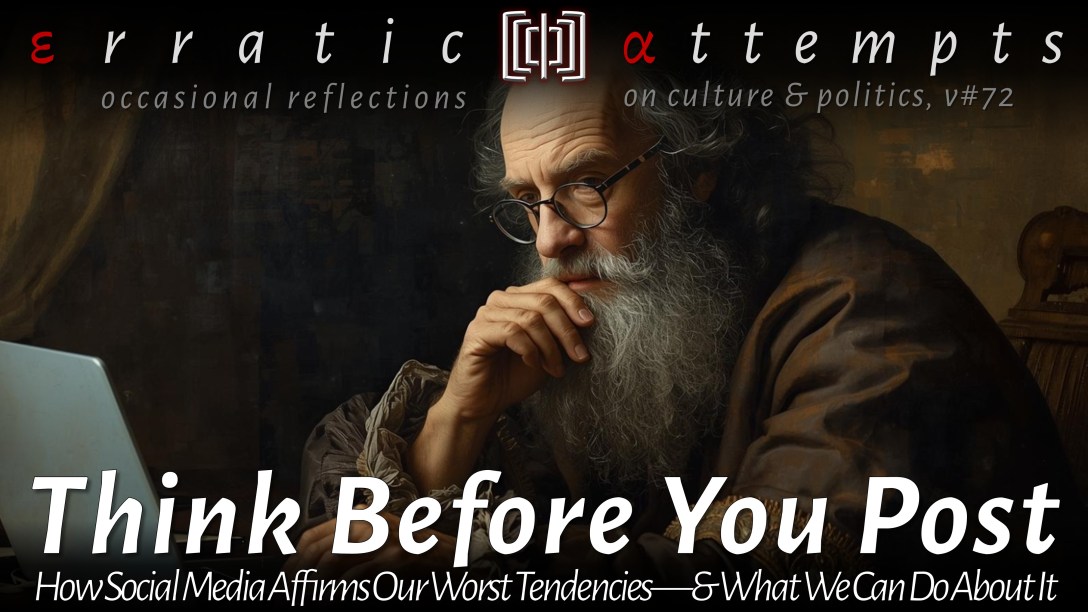
#308: Think Before You Post: How Social Media Affirms Our Worst Tendencies — And What We Can Do About It

https://youtu.be/uiT8i0q18-A Social media is very good at giving us a platform to speak. But how it does that affirms our worst tendencies. What do I mean? And what can we do about it? As we all can see, we are living in a time of high volatility. We've been at it for a while. And… Continue reading #308: Think Before You Post: How Social Media Affirms Our Worst Tendencies — And What We Can Do About It

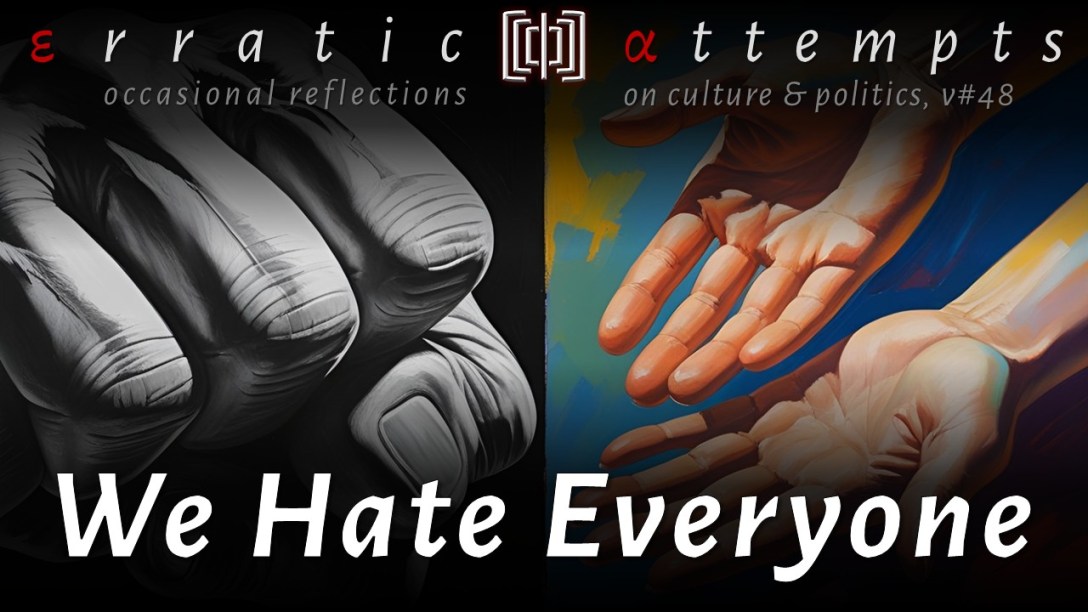
#278: We Hate Everyone: Against the Politics of Vitriol

We’ve become a "we" that thrives on disdain for differing views, a reflection of tribal instincts gone wild. Cancel culture fosters this toxicity, pushing us into rigid bubbles. Instead of embracing complexity, we dismiss and hate. It's crucial to seek understanding and compassion, dismantling these walls, rejecting hatred for a more united future.

#252: Some Reflections on Israel, Gaza, and Protests

The post reflects on the Israel-Gaza conflict and the global protests surrounding it, emphasizing the need for moral clarity and historical awareness. It critiques simplistic narratives that equate both sides, arguing that Israel’s right to exist and defend itself must be acknowledged alongside Palestinian suffering. The analysis warns against ideological extremism and calls for a balanced, humane approach rooted in justice, empathy, and democratic values.

#234: Israel is Neither Colonizer Nor Apartheid State

The post refutes claims that Israel is a colonial or apartheid state, arguing that such labels distort history and ignore the region’s complex realities. It emphasizes Israel’s democratic structure, diverse population, and existential vulnerability. The analysis warns that misusing these terms undermines legitimate critique and fuels antisemitic narratives.

#133: Am I Really Not Paying Attention If I Am Not Outraged?

Outrage is not the only valid response to injustice. Thoughtfulness, reflection, and strategic action matter more than performative anger. Constant outrage can numb empathy and distort priorities. Attention must be sustainable, not reactive.

#129: Pets Teach Empathy and How to Live

Animals communicate through emotion, gesture, and presence. Learning to understand them teaches empathy more effectively than most human interactions. Living with pets reveals the depth of nonverbal connection and reminds us that simplicity, care, and mutual recognition are the foundations of a meaningful life.

#109: We Cannot Lose Hope

Despair is tempting in the face of global crises—Afghanistan’s collapse, climate disasters, COVID resurgence—but history shows resilience. Hope is not naïve; it’s a logical stance that enables action. Believing in the possibility of a better future is the first step toward building it.

#95: For Israel, For Palestine, For Peace

Both Israelis and Palestinians have legitimate claims to the land. The post rejects historical absolutism and calls for pragmatic cooperation. A federal or shared governance model is proposed as an alternative to the two-state solution. Peace requires empathy, compromise, and local ownership of the process.

#38: Radical Empathy

Empathy must be radical—an active embrace of otherness. The post critiques self-centeredness and calls for humility, connection, and compassion. True engagement requires accepting discomfort and recognizing that difference enriches, rather than threatens, our shared humanity.