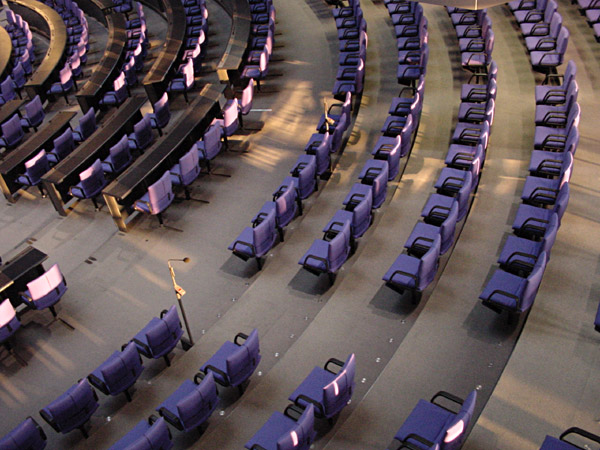
#286: Democracy Needs Humility

In a world tainted by partisan divide, the essence of democracy hinges on humility and listening to all voices. Politicians must ditch blind loyalty, embrace complexity, and recognize that people's values matter more than rigid ideologies. Only then can true democracy flourish, transcending the toxic tribalism gripping political discourse today.

#254: What If I’m Wrong?

The possibility of being wrong about the war in Ukraine is considered not as a sign of weakness, but as a moral and intellectual responsibility. The post explores the dangers of false equivalence and the temptation to retreat into neutrality. It argues that acknowledging uncertainty must not lead to passivity or moral relativism. Instead, it calls for clarity in confronting aggression, recognizing the stakes of the conflict, and maintaining a principled stance even amid complexity and doubt.

#242: On the Difference between Opposition and an Anti-Democratic Stance

The post distinguishes legitimate political opposition from movements that undermine democratic norms. It critiques tactics that delegitimize institutions, spread disinformation, or glorify authoritarianism, arguing that democracy requires both dissent and a shared commitment to truth, accountability, and peaceful governance.

#231: Centrism Is a Methodology, Not Primarily an Ideology

Centrism is defended as a pragmatic approach to governance rooted in compromise, dialogue, and democratic values. The post argues that ideological purity undermines progress, while centrism enables sustainable change by engaging diverse perspectives. It presents centrism as a method for navigating complexity, not a weak or indecisive stance.

#219: Some Reflections on Fukuyama and the End of History

Fukuyama’s thesis is revisited in light of contemporary authoritarian resurgence. The post critiques premature triumphalism and argues that democracy remains fragile and contested. It calls for renewed philosophical engagement with history, ideology, and the conditions of freedom.

#207: Democracy Only Works with a Strong Separation of Powers

The post argues that liberal democracy depends on institutional checks and balances. Drawing on historical examples from Athens, Rome, and Weimar Germany, it warns against populist erosion of judicial and legislative independence. Democracy is framed not as majority rule, but as a system that protects individual rights through structural safeguards.