#303: What Is Bias? How Do You See It in Artificial Intelligence?

https://www.youtube.com/watch?v=qG_ns_NRv3E [This post is a modified transcript of a video posted already on November 1, 2023] Today we're doing something different. These videos usually show me talking with limited entertainment value. I've been advised to mix things up, and I typically use my own photographs. My website features poetry, photography, and other content, and I've… Continue reading #303: What Is Bias? How Do You See It in Artificial Intelligence?

#282: Enough Already. Hamas is Sufficiently Weakened, and People Need a Future

When Israel's right to self-defense meets the imperative for peace: Hamas stands weakened, yet war's poison darkens both societies. Justice requires knowing when victory demands restraint—when continued warfare becomes the enemy of the very security it seeks to protect.

#278: We Hate Everyone: Against the Politics of Vitriol

We’ve become a "we" that thrives on disdain for differing views, a reflection of tribal instincts gone wild. Cancel culture fosters this toxicity, pushing us into rigid bubbles. Instead of embracing complexity, we dismiss and hate. It's crucial to seek understanding and compassion, dismantling these walls, rejecting hatred for a more united future.

#264: Freedom from Assad

The fall of Bashar al-Assad is presented as a victory for Syria and humanity, marking the end of a brutal regime responsible for torture, repression, and regional instability. The post links Assad’s defeat to the weakening of Russian and Iranian influence, and highlights Turkey’s role in supporting Syrian liberation. It raises questions about Syria’s future, emphasizing the need for moderation, justice, and democratic governance. The conclusion reflects on Syria’s ancient civilizational legacy and expresses hope for a more peaceful and dignified future for its people.

#252: Some Reflections on Israel, Gaza, and Protests

The post reflects on the Israel-Gaza conflict and the global protests surrounding it, emphasizing the need for moral clarity and historical awareness. It critiques simplistic narratives that equate both sides, arguing that Israel’s right to exist and defend itself must be acknowledged alongside Palestinian suffering. The analysis warns against ideological extremism and calls for a balanced, humane approach rooted in justice, empathy, and democratic values.

#241: The War Against Israel

The post defends Israel’s right to exist and respond to aggression, while acknowledging the suffering of Palestinians. It critiques anti-Israel rhetoric that veers into antisemitism and calls for a nuanced understanding of the conflict rooted in history, justice, and the protection of democratic values.

#239: Is History Helpful for Solving Conflicts?

History helps explain how conflicts arise, but relying on it to prescribe solutions can be limiting. The post argues that ideological uses of history often perpetuate division and suffering. True progress may require letting go of historical grievances to build inclusive futures, as exemplified by the European Union’s transcendence of past territorial disputes.

#238: Kristallnacht, 85 Years Later

Eighty-five years after Kristallnacht, the post reflects on the enduring lessons of that night of terror. It emphasizes the importance of historical memory in resisting antisemitism and authoritarianism today. The analysis warns against moral relativism and the normalization of hate, arguing that silence and indifference remain complicit. Remembering Kristallnacht is framed as a moral obligation to defend human dignity and democratic values in the face of rising extremism.

#237: No, Israel is Not Committing Genocide in Gaza

Accusations that Israel is committing genocide in Gaza are firmly rejected. The post argues that while civilian suffering is real and tragic, the term “genocide” misrepresents both intent and context. It distinguishes between military action and systematic extermination, warning that misuse of such terms undermines genuine human rights advocacy. The analysis calls for moral precision, historical awareness, and a commitment to truth in evaluating the conflict

#234: Israel is Neither Colonizer Nor Apartheid State

The post refutes claims that Israel is a colonial or apartheid state, arguing that such labels distort history and ignore the region’s complex realities. It emphasizes Israel’s democratic structure, diverse population, and existential vulnerability. The analysis warns that misusing these terms undermines legitimate critique and fuels antisemitic narratives.

#229: Fighting for Love in Times of War

Amid war and hatred, the post calls for a radical commitment to love, empathy, and human dignity. It argues that emotional resilience and moral courage are essential to resisting dehumanization. Love is framed not as naïve sentiment, but as a political and ethical stance against violence and despair.

#228: Hamas Attacked Israel

The post documents and condemns Hamas’s attack on Israel, emphasizing the brutality and ideological extremism behind it. It argues that the assault was not a spontaneous uprising but a calculated act of terror. The analysis calls for solidarity with victims and a rejection of narratives that justify or minimize such violence.

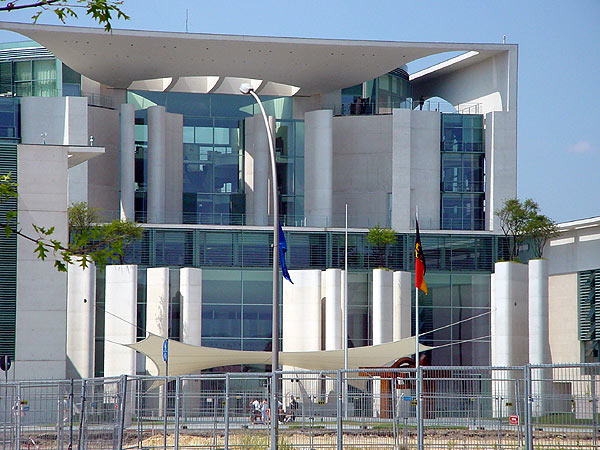
#130: German Hypocrisy: How to Claim to be a Moral Leader While Acting Like an International Free-Loader. A Polemic

Germany’s reluctance to support Ukraine and invest in defense is critiqued as moral posturing without substance. The country benefits from global stability while avoiding responsibility. True leadership requires sacrifice, not just rhetoric. Europe’s future depends on shared commitment.

#99: Anti-Zionism Is Anti-Semitism

Opposing Israel’s existence under the guise of anti-Zionism is framed as a form of antisemitism. The post argues that denying Jewish self-determination while accepting it for other groups reflects a double standard. Criticism of Israeli policy is legitimate, but rejection of Israel’s right to exist crosses into bigotry.

#95: For Israel, For Palestine, For Peace

Both Israelis and Palestinians have legitimate claims to the land. The post rejects historical absolutism and calls for pragmatic cooperation. A federal or shared governance model is proposed as an alternative to the two-state solution. Peace requires empathy, compromise, and local ownership of the process.