
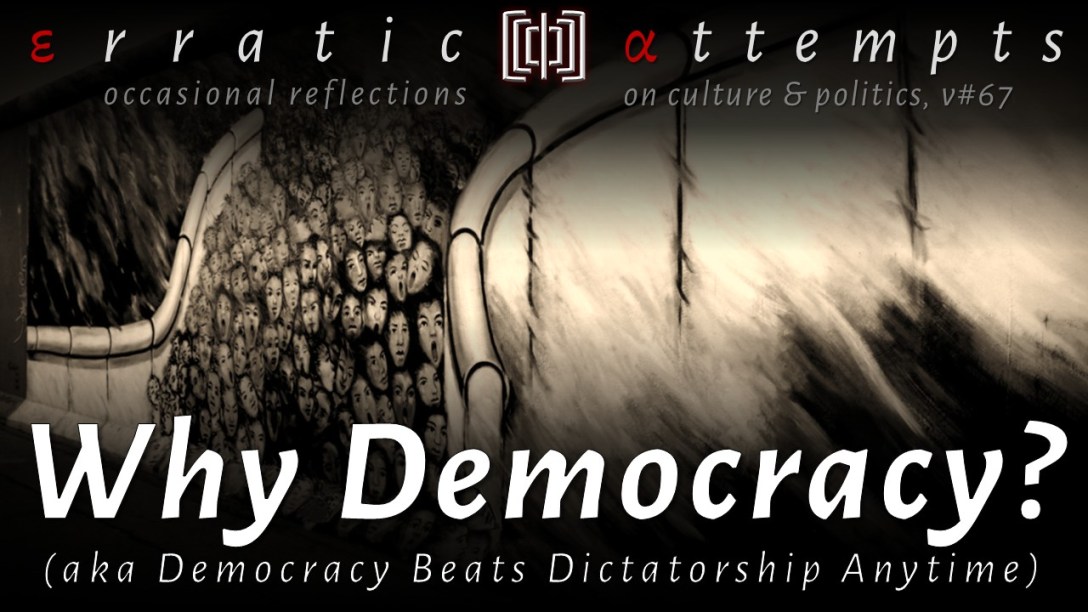
Democratic frustration drives dangerous fantasies about authoritarian alternatives. Yet examination of actual dictatorships—from Saudi Arabia's repression to China's surveillance state—reveals democracy's irreplaceable value. Even flawed democracies permit dissent, self-correction, and personal freedom. History demonstrates that "mild" autocracies inevitably tighten control. Democracy's messiness remains civilization's best defense against tyranny's seductive promises.RetryClaude can make mistakes. Please double-check responses.
Tag: GDR (East Germany)
#292: Trump Meets Putin: What to Expect?
Trump’s forthcoming engagement with Putin is portrayed as a misguided exercise in self-importance. Ukraine’s resolve remains unshaken, while Russia faces mounting decline. Proposals involving territorial concessions are condemned as perilous appeasement. Embracing Kremlin narratives, the argument suggests, undermines democratic principles and rewards aggression over resilience and strategic clarity.
#274: The Root Cause of the Russian-Ukrainian War
Claims that NATO expansion provoked the Russian-Ukrainian war obscure the deeper cause: Russia’s imperial ambition. Ukraine’s pursuit of democracy and sovereignty threatens Putin’s regime, which relies on authoritarianism and historical revisionism. The conflict reflects a broader ideological struggle rooted in the legacy of Soviet domination and resistance to it.
#217: Thoughts on June 17: The GDR Was an Inhumane Dictatorship
#206: The Importance of Being Political
Political engagement is presented as a moral and civic duty. The post critiques apathy and argues that being “unpolitical” enables authoritarianism. Drawing on Pericles, Kant, and liberation theology, it calls for critical thinking, public discourse, and active participation in shaping society. Citizenship is framed as both a right and a responsibility.