#303: What Is Bias? How Do You See It in Artificial Intelligence?

https://www.youtube.com/watch?v=qG_ns_NRv3E [This post is a modified transcript of a video posted already on November 1, 2023] Today we're doing something different. These videos usually show me talking with limited entertainment value. I've been advised to mix things up, and I typically use my own photographs. My website features poetry, photography, and other content, and I've… Continue reading #303: What Is Bias? How Do You See It in Artificial Intelligence?
#302: Can Ukraine Just Give Up?

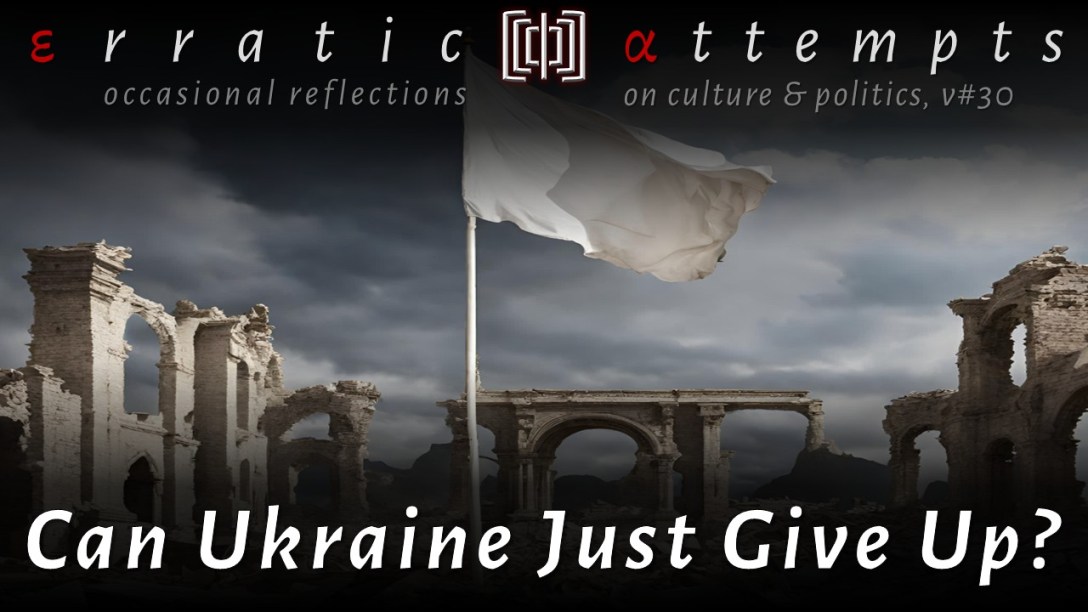
Peace talks with Putin mean surrender, not safety. Russia seeks Ukraine’s erasure, not compromise. Every “white flag” demand ignores the genocide already unfolding. Supporting Ukraine isn’t optional—it’s survival for democracy itself. Only Russian defeat can end the killing and open a path toward a better, freer Russia.

#301: Does Putin Love Russia?

Putin does not love Russia—he exploits it. True love of country means caring for its people, not sacrificing them to imperial delusions. His wars, repression, and destruction expose hatred disguised as patriotism. Ukraine’s survival demands Russia’s defeat—and only then can Russians reclaim their nation from his toxic legacy.

#300: Erratic Attempts: Crisis, Opportunity, and Simply Life

Me, Myself & I With this being my 300th post on this blog, please allow me some thoughts of a more personal nature, hopefully though with some relevance for all of us. We all, I assume, want some sense of stability, of normalcy, of predictability. When we go to bed at night, we probably hope… Continue reading #300: Erratic Attempts: Crisis, Opportunity, and Simply Life

#299: Democracy Beats Dictatorship Anytime

Democratic frustration drives dangerous fantasies about authoritarian alternatives. Yet examination of actual dictatorships—from Saudi Arabia's repression to China's surveillance state—reveals democracy's irreplaceable value. Even flawed democracies permit dissent, self-correction, and personal freedom. History demonstrates that "mild" autocracies inevitably tighten control. Democracy's messiness remains civilization's best defense against tyranny's seductive promises.RetryClaude can make mistakes. Please double-check responses.

#298: Ukraine Can and Will Win. Why and How?

Ukraine's victory over Russia appears increasingly inevitable despite widespread pessimism. Putin's strategic miscalculations—failing to manipulate Trump, underestimating European resolve, and stalling military offensives—reveal fundamental weaknesses. Ukraine's technological innovation, democratic resilience, and forward-looking strategy contrast sharply with Russia's backward-looking imperial nostalgia. Historical precedent confirms: ideologues lose to pragmatists in prolonged conflicts.

#297: Europe Must Step Up to Support Ukraine

Europe must wake up and act against the existential threat posed by Russia. Mere reliance on U.S. support is futile; Europe needs troops, no-fly zones, and a cohesive foreign policy. The fate of democracy in Ukraine and beyond hinges on decisive action now. Embrace strength or risk irrelevance—it's that simple.

#296: Putin’s Mistakes

Putin’s hubris has led him to grave miscalculations, underestimating both the resilience of the West and the consequences of his authoritarian reign. His dismissal of opposition and reliance on natural resources over innovation have stagnated Russia, proving that true strength lies in the system, not the ruler. The war's toll is ultimately self-defeating.

#295: Trump Met Putin – The Aftermath

In a tense meeting overshadowed by desperation, Trump and Putin's Alaska rendezvous was anything but triumphant. Trump, visibly uneasy, faced a seemingly manipulative Putin who twisted narratives of Ukraine's existence. This was a failed spectacle, revealing Putin's weakness rather than strength, leaving the world questioning any potential outcomes. A mere façade of power crumbled.

#294: Does the Speed of Innovation Drive Unhappiness?

Are we prisoners of our own choices? Despite unprecedented wealth and options, our happiness is plummeting, thanks to technology's relentless upgrade culture. Each new gadget serves as a reminder that yesterday's purchase is archaic. This cycle breeds dissatisfaction, making us reluctant to cherish what we own. Welcome to the age of constant longing and discontent.

#293: AI Extends Knowledge – If We Have Some Already

AI has the potential to enhance knowledge, but it requires users to possess a foundational understanding. As society surrenders critical thinking to AI tools, especially younger generations, we risk losing depth and nuance in knowledge acquisition. Relying too heavily on AI jeopardizes our ability to evaluate information meaningfully.

#292: Trump Meets Putin: What to Expect?

Trump’s forthcoming engagement with Putin is portrayed as a misguided exercise in self-importance. Ukraine’s resolve remains unshaken, while Russia faces mounting decline. Proposals involving territorial concessions are condemned as perilous appeasement. Embracing Kremlin narratives, the argument suggests, undermines democratic principles and rewards aggression over resilience and strategic clarity.

#291: Whenever You Negotiate, You Need to Know the Details.

Putin’s ambitions extend beyond mere territory; they're about control and global influence, cloaked in a facade of negotiation. Trump’s simplistic business mindset risks overlooking the complexities of the Russia-Ukraine conflict, treating it like a mere transaction. Ukraine’s struggle is not just for land but for justice and existence against corruption and manipulation.

#290: On Criticism vs. Hate

Criticism demands precision; hate thrives on generalization. The author condemns blanket judgments—whether against Russians, Israelis, Palestinians, or religious groups—and urges moral clarity. Democratic speech is a tool, not a weapon. Conflating critique with prejudice empowers extremism and erodes civic responsibility. Precision, not passion alone, defines ethical dissent.

#289: How We Speak to Each Other Matters

In a world filled with shouting and outrage, true dialogue is drowned out. This provocative chaos achieves nothing meaningful; it only fosters resentment and misunderstanding. To effect real change, we must abandon the theatrics of screaming and embrace active communication, treating others with respect and understanding. Are you ready to listen?